
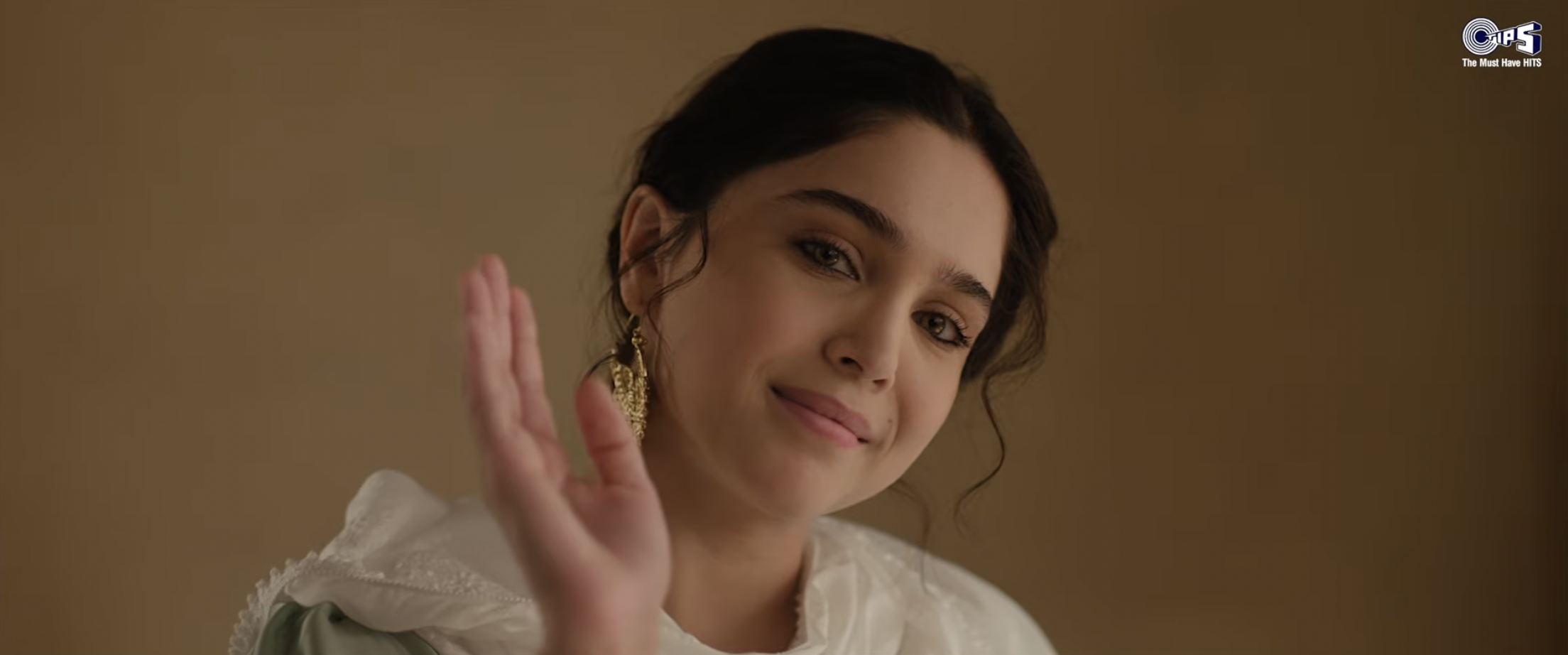
I Remain Me Because You Are You: Remembering, Belonging and Returning in Main Vaapas Aaunga
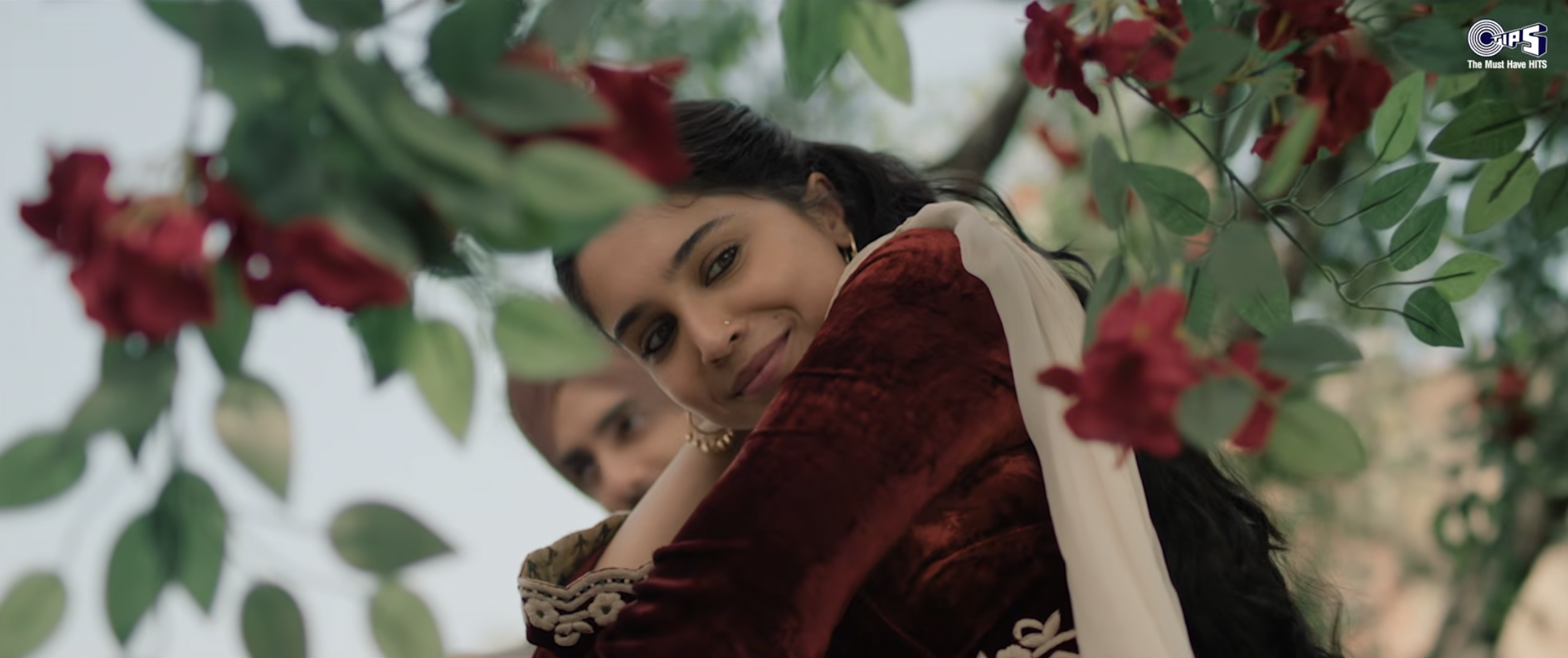
Image Source: YouTube
I know those eyes. They look like mine.
It wasn’t until I had seen a glimpse of Naseeruddin Shah as a Punjabi Sikh grandfather on his deathbed that I truly paid attention to Main Vaapas Aaunga. Not because I am a sadist, but because somehow, the equal parts of anguish, love, gratitude and nostalgia that translated across the screen reminded me of eyes and expressions I’ve seen before. A look I’ve seen my own elders give from a hospital bed before they departed from this world. I’m sure it’s no different from your own experience too. And then, I did my research, just as I do for films that pique my interest – a rare thing these days, if I’m honest, as cinema hasn’t truly moved me in a very long time. Perhaps not since Veer-Zaara or Fanaa or Pinjar or Rockstar.
And then I watched the film. Once alone. Once with a beautiful neighbour, a fellow Sikh woman who is my mother’s age and is so much like her. Far away from my own origins in Vancouver. Just like many audience members across social media websites who had stories about Partition in their family history, I too, couldn’t really think coherently for a few days after watching the film. Something inside me shifted, held together by a cloak woven of both grief and joy. I don’t know what that shift is yet, and I’m not going to pretend I have it all figured out for the sake of a film companion (not review) publication. I haven’t written in over two years, yet, over the past few days, this film made me write – not just write, but remember. Understand. Be aware, there may be some spoilers – but this publication doesn’t attempt to sit above the film. Rather, I’ve been sitting beside it on the steps of my building while existing with the tree across me as I have been for years. Blinking as it rustles its leaves. Understanding and reflecting on grief and nostalgia that is not fully my experience and yet has been an ache in my bones since the beginning of my existence.
I remain me because you are you.
Keenu (Ishar Singh Grewal, played by Vedang Raina and Naseeruddin Shah) and Jiya (Afzana Hasan, played by Sharvari Wagh) cannot be simply reduced to an innocent, imperfect love story. Although the plot of their love story is short-lived and woven into a larger tale about the social, economic, political and cultural effects of Partition, mass migration and genocide, the way the rest of their lives are shaped by their love holds its own silent, subtle thread throughout the film.
Against everything they had imagined for themselves, getting married and living their love for the rest of their lives, Keenu and Jiya wholeheartedly, yet reluctantly, come to symbolize the duty to perform over the privilege of being recognized as individual people. Their story is not perfect, and neither are they (just like all Imtiaz Ali characters, to be honest), but it offers earnest insight into two people who grew through, were deeply afflicted by, and still clung onto love and innocence when life gave them absolutely zero reason to. They made a promise to stay. Again, and again, and again. Even if it was an impossible promise.
And although, as Keenu realized, the world ended and everything was destroyed post-Partition, they still continued onward in their lives: into duty, as spouses to different partners, as parents and grandparents, as homemakers and business owners, carrying parts of each other so deeply through a wrist tattoo of Malika Dilfareb (ملیکہ دلفریب) and a missing moon-shaped earring (chandbali | ਚੰਦਬਾਲੀ). If we pay just enough attention, we realize that even though nothing remained the same, and they had spent seventy-eight years apart, Keenu and Jiya remained fully etched into each other's identities and lives until the end. As if their very selfhoods had become the thing that kept them bonded, even when everything was destroyed and their worlds fell apart.
By the end of the film, we're shown that they remained whole and together, even as their identities and lives remained fragmented and separated. Even against all the other relationships they fulfilled, there remained a defiant, quiet act of remembrance and devotion: a physical piece of home and wholeness despite the chaos, despite a strange new land Keenu was forced to arrive in as a refugee, and despite Jiya’s lifelong uncertainty of whether Keenu would ever return home despite his promise.
None of this is ever announced or explained. It simply exists for us to discover for ourselves: in the visuals, in the emotional revelations, in the quiet spaces between dialogue. And I believe this is intentional. It asks the audience to sit outside their ego and logic and to pay attention to the quiet details of a life and time that is starkly different from theirs, to infer what remains unsaid, and to recognize that some of the greatest love stories are carried not through grand declarations, but through the silent acts of remembrance we almost miss if we aren't looking.
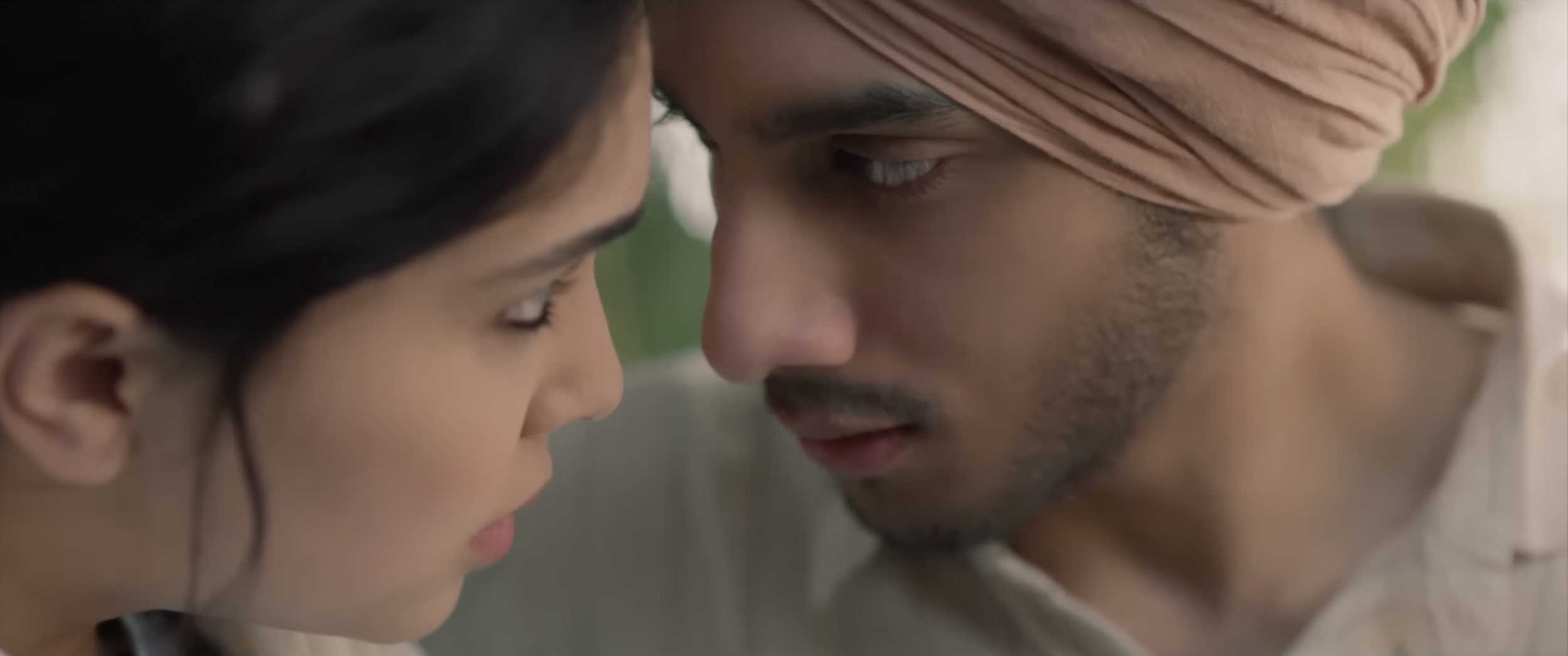
Image Source: YouTube
Grief that is not ours is also ours.
Regardless of the fictional elements of the film, the generic link between a love story set in 1947 and an audience in 2026 remains the facts of Partition. How we all (not just Punjabis) have a story of forced migration and the collective horror and displacement it caused in our family histories. We hold stories of friends, family, neighbours, parents and grandparents, of what it was like to be stripped away from everything you know and love. Through oration and dialogue, with parallels drawn through Nirvair's (played by Diljit Dosanjh) stand-up comedy, these stories continue to find new, innovative ways of being told. The times change. Oration styles change. The stories? They remain the same.
What begins as a surface-level comedic rant about diasporic identity to a handful of uninterested audience members gradually becomes something much larger: a comprehensive story with depth, irony and heart. It becomes a reclamation of mother tongue. Of identity. Of the absurdity of being robbed of your home and the relics that belonged to it, from the Kohinoor to the stories we continue to carry. And of the defiant spirit that remained after those who stole from us left by reclaiming their language and making it our own.
For Nirvair, doing stand-up comedy in a sparsely occupied bar in London, calling Bradford the capital of Punjab, confusing London with Lahore on stage, eventually transforms into a packed room in Chandigarh where his voice and words are no longer fragmented. There is now a coherent story to his comedy, one that moves from stereotype to social commentary, from surface-level observations to deeply personal and collective history.
He doesn't just reclaim his voice. He understands himself through it. By returning to his grandfather's story as he approaches death, Nirvair slowly returns to himself. It is a journey many diasporic and third-culture children come to recognize: growing up with a fragmented identity and the pressure to assimilate and integrate before ever having the opportunity to understand, appreciate or even grieve the culture, heritage and history they were born into.
Nirvair’s relationship with his grandfather is one I recognize. Being attached to the elders in your life and building a deep relationship with them is a feeling I know greatly: to sit and listen to their stories, to decode their past, to excavate their lives and understand them through different eras, different versions of themselves, their growth, their hurt, their history. Probably just like you.
They sit there with fragile skin and shaking legs while you listen to details about the mountains they had to become to support their families and keep them alive through monstrosities you could never fathom while sitting safely in your own home. You begin to realize that your experience of the same building might not be the same as theirs. To you, it might be your kitchen. To them, it may remind them of where their mother's tavaa ਤਵਾ (griddle, flat skillet) used to sit over the fire.
Nivi is the light that does not let us forget, as is every grandchild who sits with their grandparent to understand their story. It's an immersive process, but one that transforms your understanding of life, relationship and memory in ways you don't quite expect.
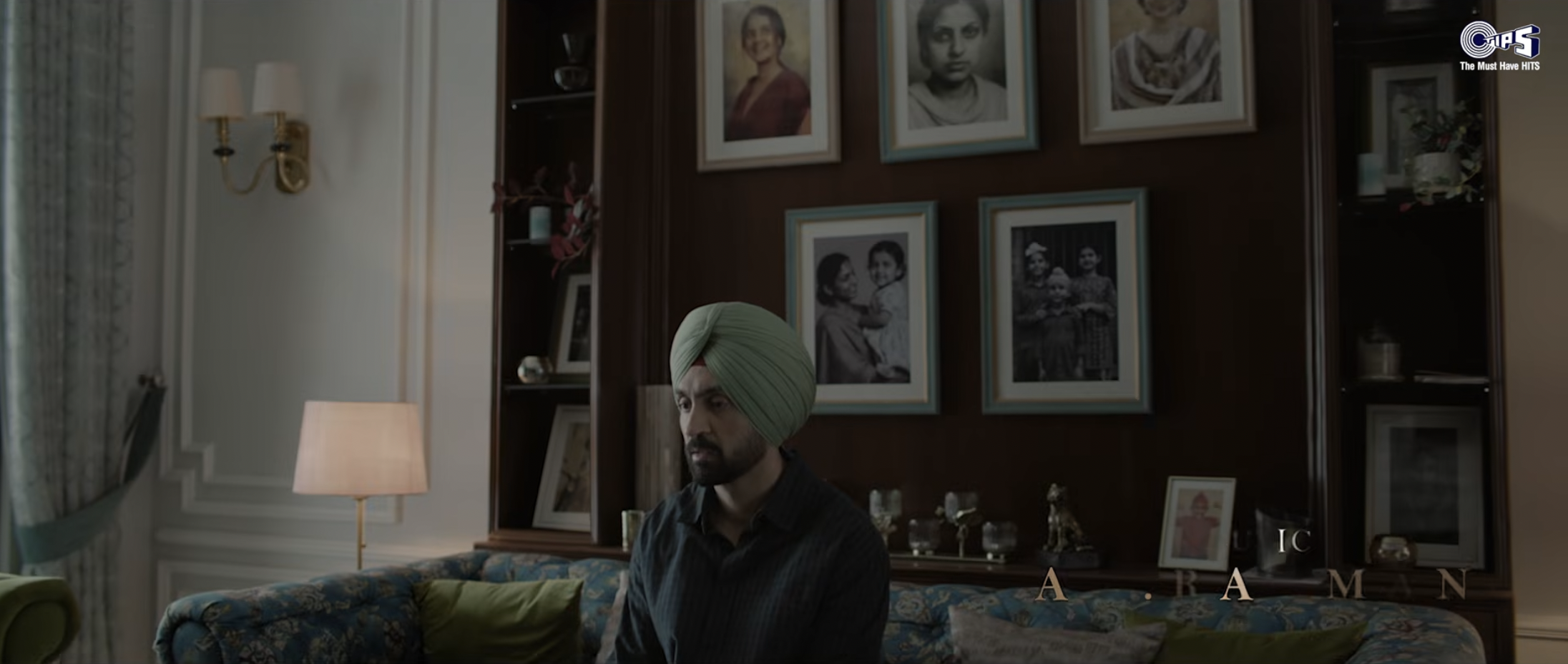
Image Source: YouTube
Diljit Dosanjh as Nirvair Grewal in Main Vaapas Aaunga
Who are you trying to come back to?
At its core, this film does not resolve intergenerational trauma. The task is too big for a single film to reconcile four or five generations of enduring trauma and silence in our DNA. But it does something bigger. It asks us to confront what we are running away from. To sincerely look at ourselves and honestly gather the trauma, sacrifice, and the hidden, untold stories of horror and love that we come from.
It asks us not to be displaced within ourselves, but to find wholeness. To choose love and joy and community; the nostalgia that lives in our bones is fully available to be tapped into and recreated by us, just as the horrors of Partition, current mass migration and genocide continue to be.
Yet that longing lives in our bloodlines through identity confusion, hybrid identity and expressive, immersive cultural fusion. We reclaim the ways we know how to. We preserve.
But somewhere underneath all the projects, the festivals, the websites, the movements, the new-era hybrid identity, cultural revolution and reclamation, we forget to preserve our collective identity, longing and history through relationships over material objects. Through presence over sensory experience.
We inherit the loop of Separation → Memory → Reconstruction
Migration has always been about more than crossing a geographical border. It is also about crossing memory. About learning to belong in places that will never quite resemble the ones your family once called home. There is a peculiar grief in longing for somewhere you have never lived, a grief of not being one with roots you’ve never known. It is a feeling many children of migration, third-culture kids and diasporic communities quietly carry throughout their lives. Not because we remember these places ourselves, but because we inherited fragments of them through stories, language, food, laughter, silence and relationship; we accept a scattered understanding of home. After all, who are we if we do not belong?
Perhaps that is why remembering is an act of reclamation. We do not remember simply because we are nostalgic. We remember because forgetting has consequences. We remember so that histories are not repeated, so that sacrifices are not erased, so that the people who came before us remain active participants in who we continue becoming. We listen to understand. We speak so we know. This is how we do not forget.
Geographical borders are manmade. They cannot be seen from space. Yet the consequences of drawing them are profoundly identical – they uproot, they silence, stifle and erase memory. Communities fragment. Shared language becomes politicized. Shared food becomes claimed, nationalized, politicized. Neighbours become strangers. We become "us" so we can separate the mirrors of our souls into "them."
Fragmentation creates a new memory and a new identity but it’s not one that is fulfilled or satisfied. At our core, there becomes this deep longing that we fail to understand, not because of personal memory loss, but because of the unspoken, unmetabolizable collective memory of stories too painful to tell. We all know a sense of a lack of protection, violation, exposure, not feeling safe in your body or community. Even if we “belong.”
Perhaps that is why a clay lantern, a brass vase or an old steel tiffin can stop us in our tracks. Even if we cannot explain why they stir a deep longing within us, they awaken a belonging that feels so true, it holds a weight that nothing else really does.
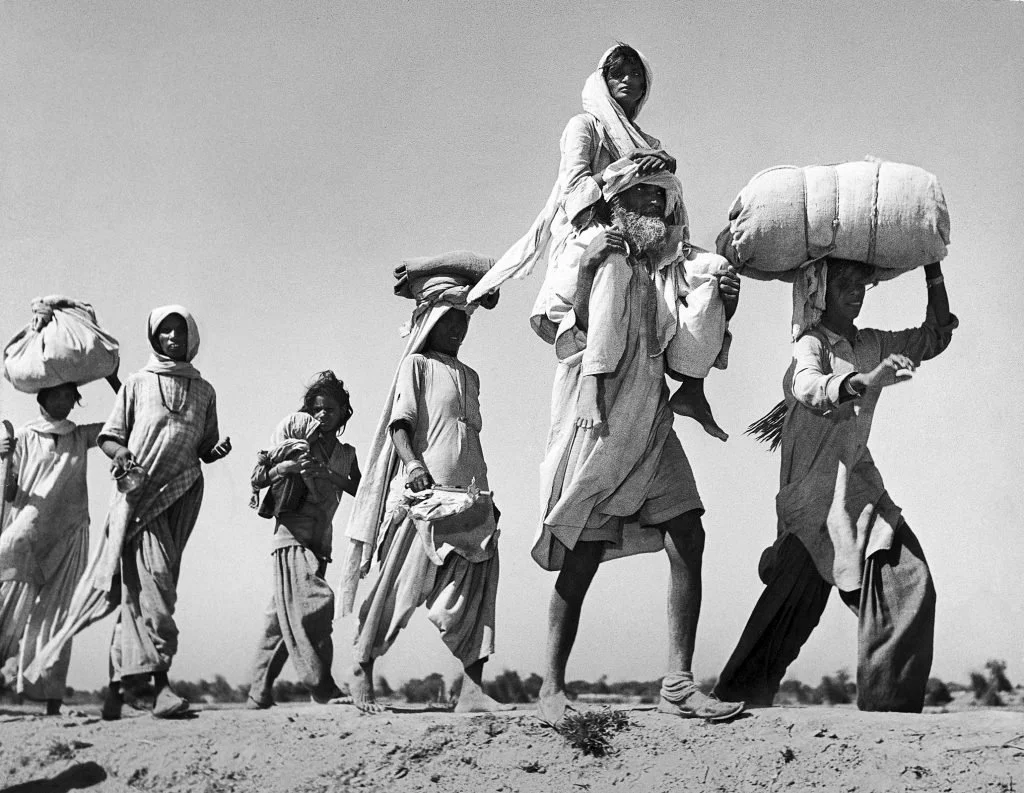
Image of mass migration during India-Pakistan’s Partition in 1947.
Image Source: Life.com
Who will remember after I am gone?
Transmission is a form of archiving we don’t truly think about. A way of remembering that preserves for only a finite amount of time through another person. A dialect survives through me because it was first passed through somebody else. How long did it survive before it reached me? How many voices carried it until it quietly became a part of my own? I can still hear the voice of my great-grandmother saying sweet words to me. Who knows how much that same voice screamed during the horrors of forced migration during Partition. Regardless, she was the apple of my eye when I was a child, and when I crossed the threshold into adulthood, I made sure to etch her name, ਗੁਰਨਾਮ, permanently beneath my heart. Like Malika Dilfareb (ملیکہ دلفریب). I carry her through more than her name. I carry her through accent and dialect – her gift to keep herself close to me for the rest of my life. When I am in conversation and my yesteryear accent is brought up, I smile and reminisce in response: "Bibi spoke to me this way." And then I wonder… Who else will speak this dialect when I'm gone?
Tradition carrying on is more than a symbolic gesture. It is a keepsake of birthright. Mother tongue. Dialect. Script. Recipe. Ritual. Holiday. Sometimes, they become the only tangible things we have left to hold onto.
What does it mean to love and grieve? For me, both sit on opposite ends of a spectrum. They come together more often than not. Perhaps preservation has always happened through relationship – not just through material objects and exhibits, but active remembrance through transmission. I pick up things about you and things you do because I love you. I catch myself saying something exactly the way you do.
We create kin in new lands. We build families. But how do we build communities? How do we remain in relationship with one another when belonging itself becomes interrupted and home grows increasingly ambiguous?
Even if we don’t understand it, we carry a collective memory of those who come before us in our bones – inheriting whole nervous systems and ways of being without knowing because it is passed down to us. The stories that come before us live within us, that’s why they resonate with us so deeply when we discover them. Imtiaz Ali did a brilliant job conveying that. You just have to pay closer attention to yourself to discover it.
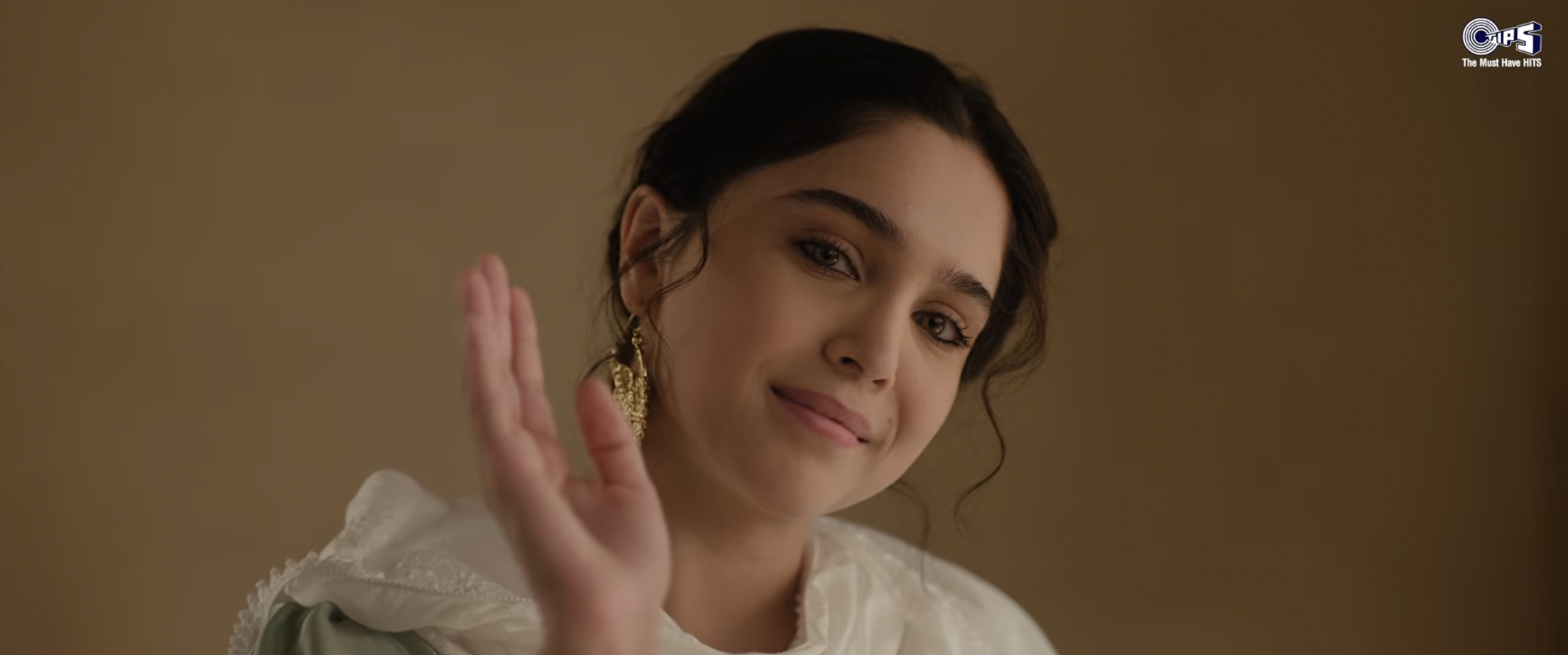
Image Source: YouTube
So,
What survives when there are no photographs or voice recordings?
What survives border crossings?
People become the archive, and what they don’t express, they pass down in dream, in memory, in remembrance. Not through visuals but through our very DNAs, our very emotional bodies we inherit from them. And when safety disappears, people adapt. Through hyperindependence, achievement, community building, advocacy, art. Through silence. Through laughter. Millennials know exactly how this feels. It is our crutch just as much as it is our limited strength. Just as two generations ago, personal memory included personal stories and moments with no faces and no photos, passed down through the collective memory of home, family, love, work, belonging and trauma. There’s a lot to learn and a lot at stake here, then, preservation is not an institution – the only way it is actively and truly carried through is through relationships.
What are the lessons that repeat about the poison that is within us, where we separate ourselves from others. Whether it’s through religion, or physical characteristics, or personality traits – not good enough, too loud, too quiet? Fundamentally, how do we understand each other? What do we neglect and let fester? What do we invite to heal?
Preservation is not an institution. It’s a relationship.
If people become the archive, then perhaps the question is no longer how we preserve history. Perhaps the question is how we preserve one another.
Do we cherish each other now just as much as we cherish archives and documentation? Do we treat one another as sacred? What are we trying to return to? Who are we trying to understand? What bridge are we trying to cross?
We may have the same name and same body – but who are we as we evolve and get traumatized by the happenings of our own lives?
Who are you to me if you don’t look like me, don’t sound like me, don’t speak the same language as me? Who am I in relation to you? If people are the archive, why are we too busy to care for and protect them while they’re still here?
What happens to the elder whose stories we keep meaning to record? The language we were too embarrassed to speak, or perhaps too proud to learn. The relative we haven't called. The neighbour whose name we still don't know. The community we keep saying we'll build when life becomes less busy.
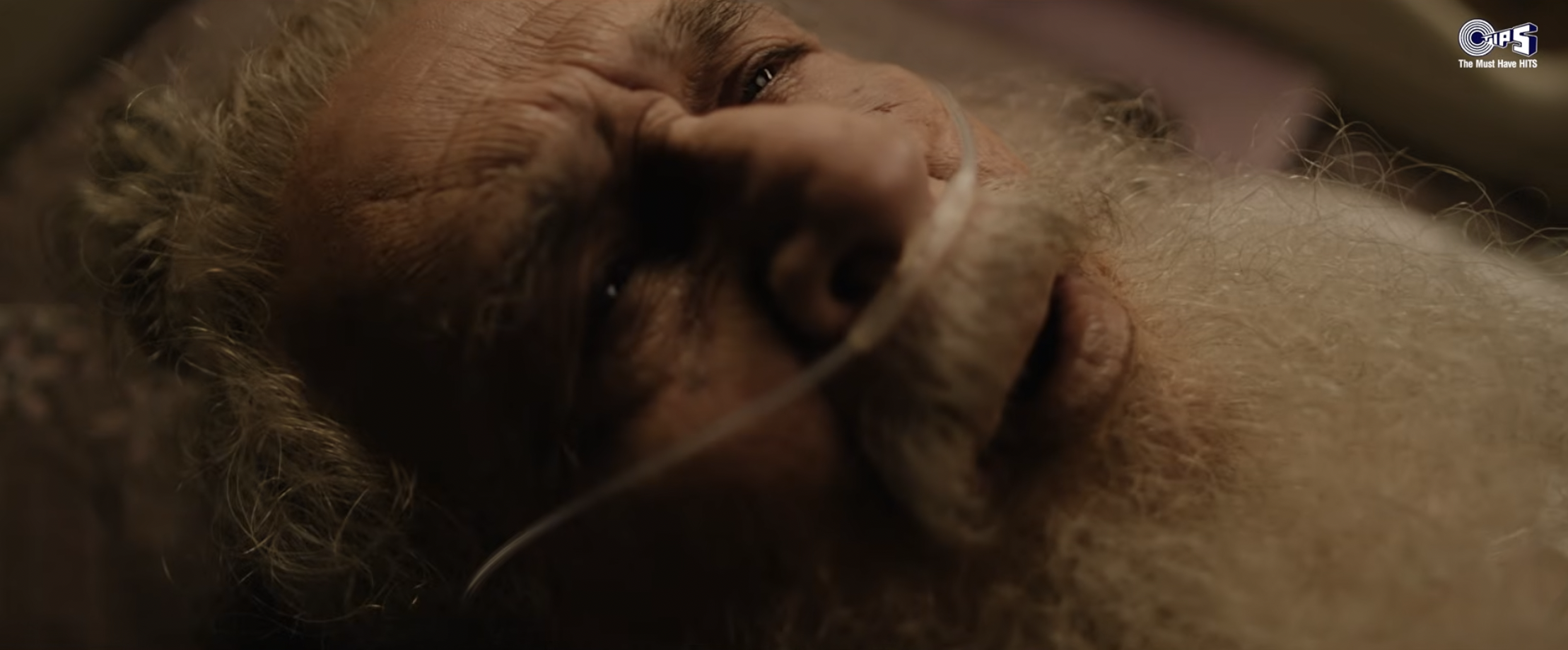
Image Source: YouTube
I can't guarantee that you'll find the answers to these questions in one go. I certainly didn't. Probably never will.
What I can promise, however, is that experiencing Main Vaapas Aaunga will bring you closer to the centre of your own heart and soul. To your story. Your emotional body. The blood and flesh you come from that survived atrocities, at one point lost everything and still carried on, imperfectly, to build families and legacies.
For two hours and forty-seven minutes, you may find yourself returning somewhere unexpected. Not necessarily to Punjab. Not necessarily to 1947. But to yourself. To the people who made you possible. To the grandmother whose roti filled your stomach long before you understood the weight of her story. To the sound of her laugh. To the twinkle in her eyes. To moments when you felt lighter, when you loved and laughed with kin, before you understood how fragile those moments really were.
Regardless of where you are, between innocence and joy, heartbreak and loss, you will feel whole.
And maybe, just maybe, when the credits begin to roll, like me, you'll hear your grandmother's laugh with a little more clarity than you did before.
Main Vaapas Aaunga is written by Imtiaz Ali and Nayanika Mahtani. The film is also directed by Imtiaz Ali and stars Naseerudhin Shah, Diljit Dosanjh Vedang Raina, Sharvari Wagh, Rajat Kapoor, Sanjay Suri, Manish Chaudhari, Nikhat Khan and Banita Sandhu. The music of the film is composed by A.R. Rahman.
(This is not a film review, but it will be categorized in our Archive as one)

Resilience and Rebellion: The Women of Heeramandi Represent Ongoing Struggles of Female Liberation
Bhansali's lens offers a nuanced perspective, celebrating the labour of women in preserving cultural heritage while challenging prevailing narratives of marginalisation.
Image credit: Netflix India – a star-studded cast featuring Manisha Koirala as Malikajaan, Sonakshi Sinha as Rehaana Begum/Fareedanjaan, Aditi Rao Hydari as Bibbojaan, Sanjeeda Sheikh as Waheedajaan, Richa Chadha as Lajjo and Sharmin Segal as Alamzeb
For decades, the saga that is Heeramandi has brewed within the playgrounds of Sanjay Leela Bhansali's mind. A project marked by numerous renditions and cast changes, it stands as a testament to Bhansali's unwavering dedication to craft a narrative that transcends mere storytelling.
Unsurprisingly, it’s also one that navigates and explores the contexts of gender within Indian society and the contexts of cultural preservation and evolution. In delving into the intricacies of womanhood, societal expectations, and the evolution of cultural norms, Heeramandi emerges not just as a tale of the past but as a thoughtful reflection of contemporary struggles and triumphs - including the notion of being subdued and oppressed, even if the fight for physical freedom is one that was conquered by our ancestors long before our time.

Image Credit: Brown History Substack – An image of a young Tawaif in the real Heeramandi as reference to this saga and the visual undercurrents that starkly differ between the series and real history of Lahore’s red light district
The enemy of a woman is not a woman
At the heart of Heeramandi lies a tapestry of relationships, both tender and tumultuous among its many female characters – one that is also a rare sight to see coming out of Indian cinema. Bhansali masterfully juxtaposes camaraderie and enmity, revealing the complexities that underscore women's interactions with each other. Through characters like Rehaana Begum and Malaika Jaan, we witness the dichotomy of sisterhood and betrayal, each action laden with societal implications and devastating personal repercussions that transcend generationally with Malaikajaan’s rivalry with Rehaana Begum’s daughter, Fareedan.
Central to the narrative is the exploration of the confines of womanhood within a patriarchal society. The series is introduced with Rehaana Begum sealing the fate of her sister, Malaikajaan’s son, and her nephew, whom she gives to a nawaab while her sister sleeps shortly after giving birth. Compared to Malaika Jaan's female children whom we are introduced to shortly after, this serves as a stark reminder of the double standards imposed on women.
Despite both enjoying wealth and privilege, the paths of Malaikajaan’s children diverge dramatically, reflecting the entrenched expectations and limitations placed upon them based on gender. On one hand, her female children are pushed to carry the weight of the Tawaif lineage within their house in Heeramandi, whilst her son, renamed Zoravar, unbeknownst to him, enjoys the lavish life of a Nawab and also ironically frequents his birth mother’s residence. This subplot concludes for the audience to reflect on with Malaikajaan revealing to Nawaab Zoravar at his wedding, in front of all of his guests, about his origins. In response to his abuse against Lajjo, of whom he was a long time patron, she reveals that the same people he disrespects are the same people and environment he was produced from. This subplot sets the stage for further social dynamics that are explored within the series.
Video credit: Netflix India – check out the scene between Malaikajaan and her son, renamed Zorawar, where she dicloses his mysterious origins after he brutalises Lajjo at his wedding
At the end of the saga, it is seen that all rivalries are squashed against a common enemy. Albeit, it is the coloniser that ends up being the enemy, it is also the patriarchal coloniser who deepens the harms and hurts between women. This is a central theme to much of the concepts that the series explores, including the genderisation of freedom movements and resistance.
It’s easier to fight for freedom when it’s not gendered
The character of Taj, the leading man of the series, returning from Britain with preconceived notions about Tawaifs, embodies the clash between tradition and modernity, as well as the overlap of East and West through the ongoing effects of the act of colonisation. His journey towards acceptance mirrors society's struggle to reconcile sensuality and womanhood with societal norms.
Through this idea, Bhansali skillfully dismantles Orientalist tropes, exposing the destructive impact of external influences on indigenous cultures and identities.
North India, including Punjab, is no doubt a regional hotbed full of colonisation and heavy militarism through various conquests over thousands of years including the Turkish, the Greeks, the Iranians and the Mughals. Yet, the cultures of so many have blended to develop the artistry of women and blend cultural archetypes into one that is distinct. Even if it does not fully represent Punjabi culture, it does outline how life was like for a specific sect of people within society pre-Partition.

Image Credit: Netflix India – Sharmin Segal as Alamzeb and Taha Shah Badussha as Tajdaar Baloch
Within Taj’s character development, the audience sees how easy it is for him to come on board to the idea of freedom fighting and resistance, yet, the hardest thing for him despite his radicalist, educated and modern views is the idea of where his lover comes from. His own development as a character sees him from being absolutely opposed to the ideas and values that Tawaifs represent.
Although he softens to the idea as he further interacts with his love interest, Alamzeb, Taj still very much embodies this during his interactions with the British police – focussing his defence on his repulsion of Alamzeb’s background and what it represents. Did he need to go this far to defend himself? Probably not. He does so anyway, ensuring that humiliating Alamzeb as a woman, specifically for her background and where she comes from, becomes the focal point of his own defence for the sake of the revolution.
The irony of this weighs heavily on the audience. Revolution and freedom come at the cost of being a woman, and the most taboo idea within the grounds of the series is that of being a Tawaif and what it represents to be one.
Moreover, Heeramandi underscores the intergenerational transmission of culture and resilience. The legacy of Tawaifs as patrons of the arts and custodians of tradition is portrayed through generations, highlighting their enduring impact despite societal ostracisation. Even within the challenges of a starkly changing society at the height of social and cultural tensions and divide, tawaifs harness their subdued and underlying identity of being women, serving their nation, and being stewards of their culture.
Bhansali's lens offers a nuanced perspective, celebrating the labour of women in preserving cultural heritage while challenging prevailing narratives of marginalisation. And even in the context of having many riches, they aren’t much in comparison to the freedom of being a male in a patriarchal society.

Image credit: The Hindu – even within the scope of having material riches, Tawaifs are subject to ample marginalisation and stigmatisation within society
Bibbojaan’s symbology is unique in the realm of celebrating Indian Freedom Fighters in History and Cinema
Bibbojaan emerges as a symbol of unwavering resilience and defiance against oppression. From her beginnings and introduction within the saga, until the very end, she embodies the spirit of a freedom fighter, confronting adversity with unmatched courage that is highlighted by her softness as a woman in her day to day life. However, what lingers hauntingly in the aftermath is the brutal stripping of her womanhood — a visceral portrayal of the sacrifices women make in the fight for freedom, liberation, and equality.

Image credit: The Hindu – featuring Aditi Rao Hydari as Bibbojaan and Fardeen Khan as Wali Saab, a nawaab and patron of Bibbojaan who often kept her informed of tensions between British colonisers and rebellion fighters.
As the series concludes, within the climax itself, we witness Bibbojaan's journey marked by bloodshed and bruises, the product of torture from colonising British officers, and each inflicted wound becomes a testament to her unyielding determination. Yet, it is the callous severance of her hair that cuts deepest and perhaps becomes the most jarring part of the scene, devoid of any reverence or symbolism of sanctity nor womanliness. This scene is a visual depiction of an attack against the divine feminine – one that is not very different to how the idea of Tawaifs is approached by the British throughout the series as is.
Further to this, unlike the portrayal of male freedom fighters, who often step into their execution chambers adorned with symbols of strength and valour, Bibbojaan is denied this visual homage and honouring. Instead, she confronts her fate with a rawness that speaks volumes of the injustices endured by women in the shadows of history. Even in her pursuit of freedom, she is not visually depicted as a wild woman in her own terms, rather, it is done to her to strip her of her dignity.
The only courage and valour we get to see as an audience in comparison to all the films about Shaheed Udham Singh and Shaheed Bhagat Singh is the courage in Bibbojaan’s eyes, and within the voices of the women supporting her behind the wall of the chamber.
In portraying the labour of women in freedom movements, Heeramandi confronts the erasure of female contributions to history as a byproduct.
The character of Bibbojaan epitomises this struggle, her sacrifice and resilience — qualities rarely explored with such depth and nuance through a female lens in cinematic settings within the history of Indian cinema until now — are starkly overshadowed by societal indifference to the topic itself.

Image Credit: Netflix India – Bibbojaan moments before her execution: her visual depiction is tattered, bruised, and violated in juxtaposition of many male freedom fighters in the context of Hindi cinema
Heeramandi disrupts conventional narrative and traditionalist ideas on what a freedom fighter looks like, sounds like, and acts like. It shines a glaring light on the erasure of women's contributions whilst celebrating a woman in her pursuit of freedom with the singing echoes of other women – many of whom Bibbojaan had tensions with within the saga – in support of her.
While male counterparts in Indian cinema are lauded for their bravery, Bibbojaan's story remains a silent testament to the countless women whose sacrifices have been overshadowed by patriarchal narratives, and it’s one that still weighs heavy and speaks to the female condition four to five generations later – within India and within the diaspora as well.
As such, then, Bhansali deftly exposes the hypocrisy of heroism, where male freedom fighters are glorified while their female counterparts are marginalised and stripped of their dignity.
Video of Azadi, a juxtaposition of how freedom fighters are traditionally shown in Indian cinema. Video credit goes to Sanjay Leela Bhansali Productions
Not your woman, no matter our class
While undoubtedly entertaining, the growing and long-lasting trend of item songs perpetuate harmful stereotypes, undermining the intrinsic beauty and symbolism of womanhood. Women are the creators of life itself, and whether in the realm of prostitution depicted in films like Gangubai Kathiawadi, or the world of high society artistry embodied by characters like Bibbojaan, women play indispensable roles in shaping our lives and society.
Yet, despite our multifaceted contributions, and despite our positions within social classes themselves, society frequently fails to accord us the respect and recognition we deserve.

Image credit: Netflix India
Thought paradigms in Heeramandi rise in existence today
In essence, Heeramandi transcends the confines of historical drama, offering a profound reflection on the complexities of womanhood and societal expectations. Through Bhansali's artistry, it becomes a poignant reminder of the enduring struggle for equality and the resilience of the human spirit, as well as the female struggle for liberation. The world is modern, it has changed so much since the time period in which Heeramandi is set.
But when you look at headlines in India, crimes against women are still at an all time high. Within the diaspora, a quick look will show an emergence of alarmingly rising movements of conservatism, be it in Hinduvta circles or right-wing Sikh circles, a woman’s value isn’t much beyond her labour for a movement or giving birth to keep a kom (community) alive and well-numbered. We are not welcome in academic settings even if we have the same (or honestly, a lot more) qualifications than our male contemporaries and counterparts. Headlines about gang rapes of women, or the secret filming of women taking a shower or engaging in intimacy with their partners still very much come out of Indian news outlets on the regular.
This is no different than the horrific plot tool of Malaikajaan being gang raped by British officers for the freedom of her daughter, Alamzeb. Women still very much suffer at the hands of men – just this time, it’s not in a colonised setting, it’s a different form of repression and oppression. It’s our own men doing it to us, in a literal sense, because man cannot be born nor borne without woman.
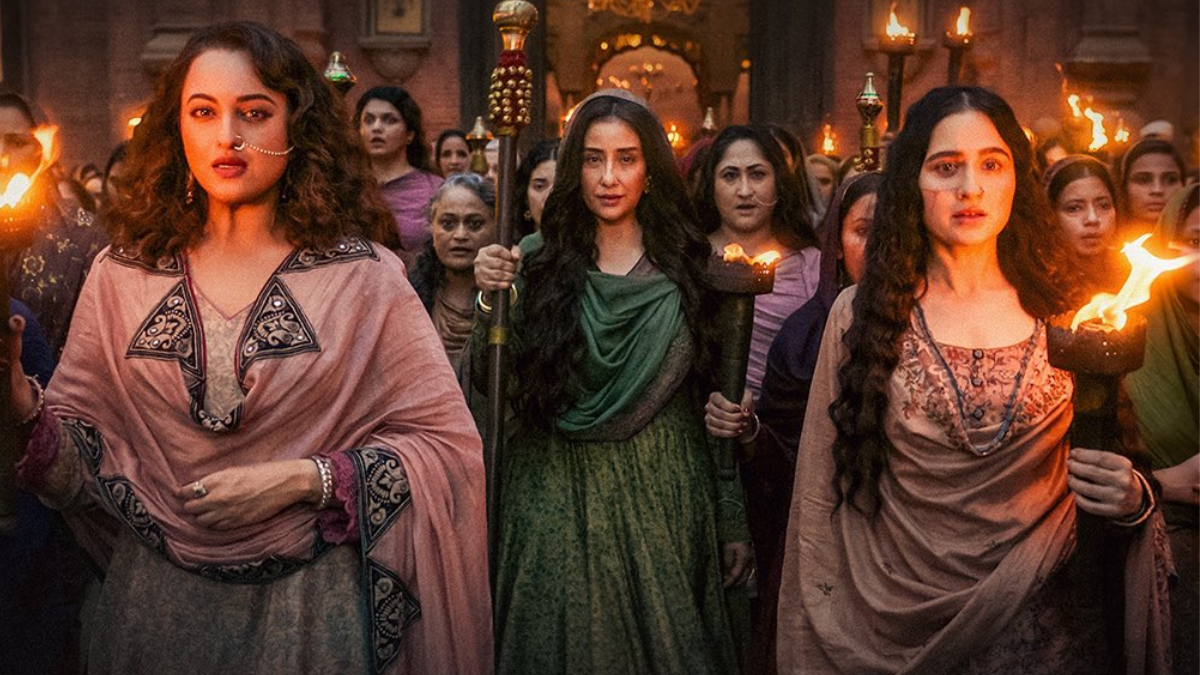
Image Credit: ComingSoon.net – Fareedan, Malaika and Waheeda tearfully and powerfully walk to the jail where Bibbojaan will be executed for rebellion. In this scene, they powerfully fight British officers and croon about the freedom of their country
Closing Thoughts
As the curtains draw on this saga, the echoes of its narrative reverberate, urging us to reevaluate our perceptions of gender, freedom, and cultural heritage. Heeramandi will be, no doubt, subject to its own criticisms by numerous groups of people for different aspects of the narrative, including and not limited to creative, artistic and historical perspectives. But, it also does a lot of good with full intention of juxtaposing against narratives of sensuality, the arts, and generational patronage. Ultimately, this saga speaks to Bhansali’s ongoing message speaking to the masses that you cannot separate a woman from her sensuality, but reducing her to a mere sexual object is a notion that is indeed destroying our world and our microcultures within it.

Image credit: Koimoi
Heeramandi is a saga that is available to watch on Netflix India. What are your thoughts on the series? Let us know!

Roses and Women Are Anything But Delicate
A Critical Commentary on Sanjay Leela Bhansali's Gangubai Kathiawadi

Image Courtesy of Scroll In
Disclaimer: If you haven’t watched Gangubai Kathiawadi, and don’t want the plot of the film to be revealed to you, bookmark this article and don’t come back until you’ve watched it.
Before you begin reading, I want you to know that this article on Gangabai Kathiwadi isn’t about how well anyone has acted or how beautiful the sets are. Neither is it a commentary on how the plot line interweaves with the cinematography.
Rather, this is a reflection of all the ways in which the film positions itself, ditching the evergreen hero and villain archetype format to refreshingly explore its characters as people. Here, all fronts are dropped to show the inner lives of women deemed disgraceful by society. Their constant challenges are ingrained in who they are, and within their every day interactions with each other.
With this approach, our inner worlds are able to mirror one another’s more deeply.
How do we interact with each other? How do we perceive each other? How do we grieve? How do we use and abuse? How do we stifle and suppress the feminine in every which way in our micro and macro cultures? Why do we do what we do?
For me, it’s most chilling to note that so many of the situations, emotions, and interactions within the film are still relevant today – 60 years after the film was set.
Jhume Re Gori from Gangubai Kathiawadi introduces Gangubai as a dreamy eyed storm of a young woman. She is free, she is happy, and she has big dreams.
Well before the end of the film, you’re quick to realise that the once timid, dreamy-eyed Gangubhai is perhaps the strongest female character to come out of India in a long time. In an age of fast plots and female characters that lack being fleshed out, she is well rounded – her sexuality is realistic against India’s long standing trend of hypersexualising women.
Gangubai is not villianised or made into an overglorified, sappy and sentimental hero. Rather, she displays astonishing spirit against the media norm for how someone who has been betrayed, and traumatised by someone she dearly trusted, as well as the ways society so easily allows women to be coerced into the flesh trade, would behave. The way she handles being sex trafficked and tortured is defiant to her circumstances. She doesn’t just fight for herself to be in better conditions despite her situation. She also fights for her fellow sisters in the brothel she is trafficked into, branded by, and forced to work in.
How she quickly gets voted in as the Madame to take care of the women who work with her underlines a very important realisation: their everyday agency and lack thereof are blended to put forth a genuine expression of the human condition. These are not just glammed up women doing a job they were forced into. Their flesh being traded also transacted their invalidity in general society. Yet, they defy being outcasts; they’re a community in this together.
Gangubai is not villianised or made into an overglorified, sappy and sentimental hero. Rather, she displays astonishing spirit against the media norm for how someone who has been betrayed, and traumatised by someone she dearly trusted, as well as the ways society so easily allows women to be coerced into the flesh trade, would behave.

Image Courtesy of The Guardian
The film’s plot refreshingly doesn’t pit women and society against one another – but rather, weaves a very apt, accurate narrative that women are a functioning, integral part of our society, no matter the trade we are in.
Instead, the relationships we observe and experience as an audience are unique juxtapositions which explore the many burdens women take on due to patriarchy. Included in this, and perhaps the most critical relationship to note is between Gangubai and Raziabai, the President of the brothel locality, Kamathipura, and a self-identifying eunuch.
Raziabai, not fitting any of society’s gender norms, laments about how she is a hardened woman who uses weapons and bullying as her ways of communicating because she had to defy all odds to even get to where she is. We see a marginalised woman scorned who does not wish to give up her power in risk of being subjected to abuse and violence that she fought so hard to rise above through harnessing political power – and we only experience this glimpse into Raziabai’s inner world and experiences as a woman after she fiercely battles Gangubai in locality politics to ultimately lose.
The film’s relational dynamics between women is a direct mirror of how our relationships with each other as women exist today. Even in the most gruelling, heartbreaking and mind-altering circumstances, the notion of sisterhood can prevail – but it is fragile, it can also crumble easily. Women often still mistaken competition as sisterhood – misidentifying harming one another for abundance and support. Decades after the film’s setting, the film prompts us to explore how we as women continue to pit ourselves against each other.
How do we recycle our traumas onto one another? How do we build relationships only to become against one another and use each other?
We are further consumed past a life cycle stolen from us – as if the only thing that should come from us is solely the benefit and satisfaction of others.

Image Courtesy of Hindustan Times
Now is a time, more than ever, that we must come together.
Dozens of horrific, high profile rape and suicide cases of women have been gouged through the media cycle. In these cases, the perpetrators have often been given the opportunity to publicly share that they have zero remorse for their actions. Even after facing terrifying, torturous death, the existence of women is torn apart, shredded by media news.
We are further consumed past a life cycle stolen from us – as if the only thing that should come from us is solely the benefit and satisfaction of others.
My settled home of Turtle Island, under the name of Canada is no different. Indigenous women are continuing to go missing, often sex trafficked and horrendously murdered to be met with the apathy of the RCMP and public. Indigenous women’s lives are continually threatened well past the periods of colonisation and genocide in our history textbooks – it’s still occurring today.
How do we come out of the mentality that we own other women? That, even as women, we can attack, spread rumours, gossip about, malign and steal from other women? What makes us think we can have ownership over one another too?

Image Courtesy of FilmiBeat
We don’t have to face the battles in our lives alone. But sometimes, we force each other to.
Gangubai’s outward, public persona of a tireless advocate for her community is starkly different from the loneliness and pain she feels, as well as the trauma and isolation she constantly works through on all fronts. The battles never end for her. And before she can process and grieve all she has lost, she is plunged into a new heartbreaking situation that life throws at her. And yet, she proudly, authentically and responsibly shows face every time she needs to. Even if she does cry alone, behind a veil.
This hasn’t changed. In my own experience of interviewing women about their trials and tribulations, they’ve often had to put on a brave face for the world as they plunged into violence and uncertainty within their own lives – a common theme for women everywhere throughout time.
Ultimately, the film sees Gangubai lobby for the rights of sex workers all the way until she meets the Prime Minister, Jawaharlal Nehru to continue her advocacy work. Well before the time countries such as the Netherlands and Canada adopted an abolitionist approach to sex work, Gangubai fought for the same cause – for buying sex from a sex worker to be illegal, not sex work in and of itself, so women in the flesh trade are not criminalised for their bread and butter.
Nehru doesn’t allow Kamathipura to be run down – because Gangubai doesn’t.

Image Courtesy of Media9 Tollywood
The male characters within the film allow the audience to explore the film in more than just a gender or occupational binary, but rather, based off their own values. Rahim Lal’s role is more than just Gangubhai’s brother – his relationship with her is formed based on his values of justice and equality, even though he himself is a part of the underworld. Afsaan, Gangubai’s companion and friend is a raw, innocent young man exploring the fine lines between love and lust while also caring for and seeing Ganguhai as a person with her own traumas. Mr. Fezi is a stark contrast of a male who mercilessly brutalised Gangubai under the guise of a client, Shaukhat Khan – Fezi is clear headed, fair, just, and provides Gangubai with opportunities to amplify her story through his trade. Indeed — the writing profession is powerful. Just as powerful as access to education.
But, you also see that women are not free of men even after death. Specifically, we see this when Gangubai’s best friend Kamli dies post childbirth, and her body is lovingly taken care of by her housemates in the brothel. Here, we see the women she lived with doting her body with a mother’s caress and a father’s protection while surrounding her body and decorating it. They reminisce while doing so, but are abruptly stopped by Gangubai, who tells them to tie Kamli’s legs tightly together “because there is no telling of the nature of men, they will desecrate a woman’s dead body to fulfill their sexual urges.” This dialogue, and the coldness in Gangubai’s eyes as she says it reminds me of Mukesh Singh, the man who stole the life of Jyoti, internationally known as India’s daughter. “While being raped, they shouldn’t fight back,” he said. Closed legs, a subject of endless discussion to blame women for being sexually assaulted. Today, in this context, they are a symbol of defiance.
As I explore the different personalities of the male characters, in this film, something dawns on me. Values define who we are. No matter our trade, no matter our gender. If our principles do not reflect respecting one another’s bodies, intellect, intelligence, emotions and life experiences, we cannot truly be allies of one another. It always starts with self.

Image Courtesy of Filmi Beat
The main takeaway?
Women are powerful. Despite being censored, policed, undervalued, overworked, overburdened, and subjected to fixing the world’s problems, we are anything but weak or meek. We have been fighting an uphill battle for millenia – with glimpses of light before being plunged back into darkness. But, we have work to do. We cannot claim to be part of a larger sisterhood when we are also hurting one another – yes, patriarchy has hurt us, but if we are unable to be true to ourselves around each other, to harness strength in one another’s vulnerability, respect each other’s boundaries, we cannot truly advocate for each other or ourselves.
And to those who work against us
You can try to censor us while you worship us. You can try to control us while we nurture you. You can try to take control of our bodies through unjust abortion law overturns (I’m looking at your mistakes overturning Roe v. Wade, America – and your recent decision to disqualify sexual assault under the influence of alcohol, Canada). You can do all you can to dim our voices.
We will roar louder. We will survive against all of the ways in which you try to box us in. Somewhere, we may be crying or laughing behind veils. One day, I pray we will be laughing and crying in meadows together – as sisters walking this life. But, today – everyday and always – we will not let ourselves exist in the shadows of society.
If you haven’t caught Sanjay Leela Bhansali’s Gangubai Kathiawadi yet, you can stream it on Netflix. If you don’t understand Hindi, there is an English dub option, as well as subtitles in English. It stars Alia Bhatt, Shantanu Maheshwari, Vijay Raaz, Jim Sarbh, Varun Kapoor, Seema Pahwa, Indira Tiwari, Ajay Devgn and Huma Qureshi.