I Remain Me Because You Are You: Remembering, Belonging and Returning in Main Vaapas Aaunga
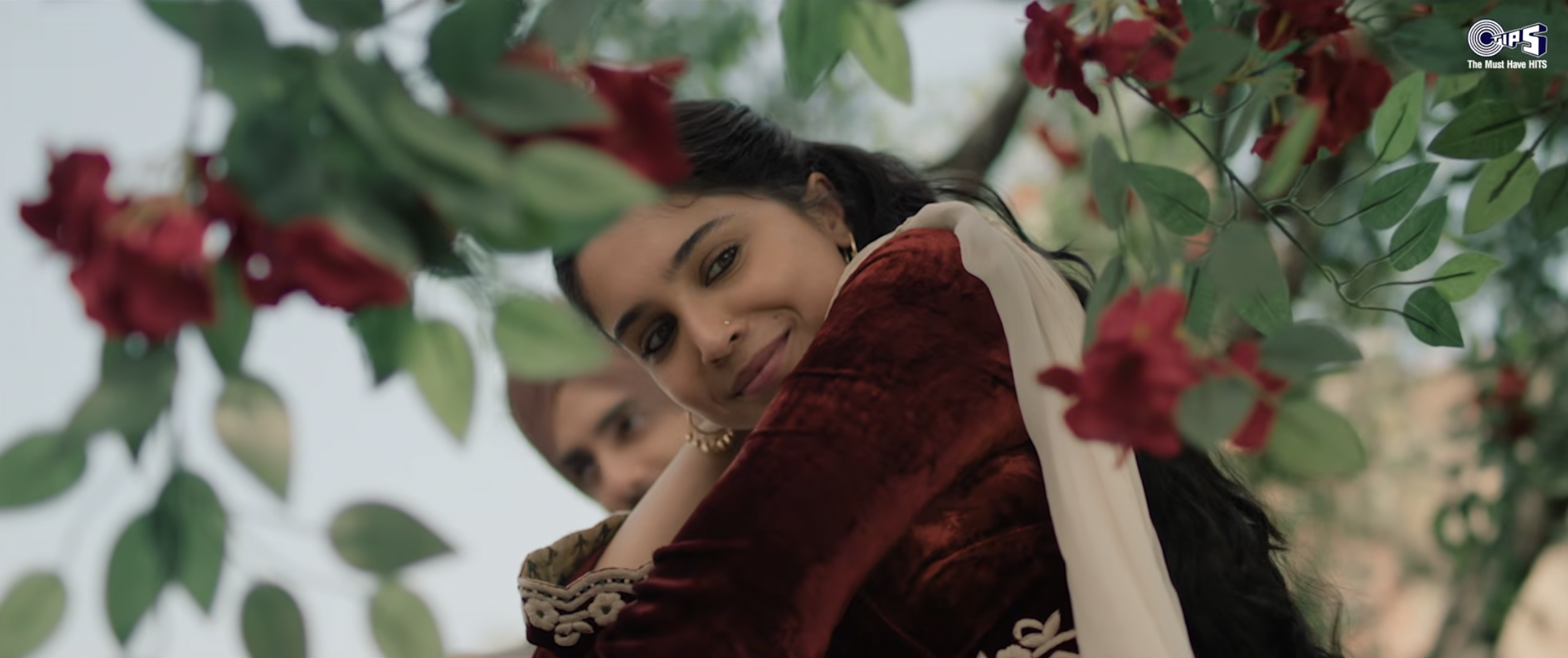
Image Source: YouTube
I know those eyes. They look like mine.
It wasn’t until I had seen a glimpse of Naseeruddin Shah as a Punjabi Sikh grandfather on his deathbed that I truly paid attention to Main Vaapas Aaunga. Not because I am a sadist, but because somehow, the equal parts of anguish, love, gratitude and nostalgia that translated across the screen reminded me of eyes and expressions I’ve seen before. A look I’ve seen my own elders give from a hospital bed before they departed from this world. I’m sure it’s no different from your own experience too. And then, I did my research, just as I do for films that pique my interest – a rare thing these days, if I’m honest, as cinema hasn’t truly moved me in a very long time. Perhaps not since Veer-Zaara or Fanaa or Pinjar or Rockstar.
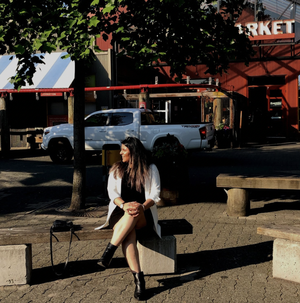
And then I watched the film. Once alone. Once with a beautiful neighbour, a fellow Sikh woman who is my mother’s age and is so much like her. Far away from my own origins in Vancouver. Just like many audience members across social media websites who had stories about Partition in their family history, I too, couldn’t really think coherently for a few days after watching the film. Something inside me shifted, held together by a cloak woven of both grief and joy. I don’t know what that shift is yet, and I’m not going to pretend I have it all figured out for the sake of a film companion (not review) publication. I haven’t written in over two years, yet, over the past few days, this film made me write – not just write, but remember. Understand. Be aware, there may be some spoilers – but this publication doesn’t attempt to sit above the film. Rather, I’ve been sitting beside it on the steps of my building while existing with the tree across me as I have been for years. Blinking as it rustles its leaves. Understanding and reflecting on grief and nostalgia that is not fully my experience and yet has been an ache in my bones since the beginning of my existence.
I remain me because you are you.
Keenu (Ishar Singh Grewal, played by Vedang Raina and Naseeruddin Shah) and Jiya (Afzana Hasan, played by Sharvari Wagh) cannot be simply reduced to an innocent, imperfect love story. Although the plot of their love story is short-lived and woven into a larger tale about the social, economic, political and cultural effects of Partition, mass migration and genocide, the way the rest of their lives are shaped by their love holds its own silent, subtle thread throughout the film.
Against everything they had imagined for themselves, getting married and living their love for the rest of their lives, Keenu and Jiya wholeheartedly, yet reluctantly, come to symbolize the duty to perform over the privilege of being recognized as individual people. Their story is not perfect, and neither are they (just like all Imtiaz Ali characters, to be honest), but it offers earnest insight into two people who grew through, were deeply afflicted by, and still clung onto love and innocence when life gave them absolutely zero reason to. They made a promise to stay. Again, and again, and again. Even if it was an impossible promise.
And although, as Keenu realized, the world ended and everything was destroyed post-Partition, they still continued onward in their lives: into duty, as spouses to different partners, as parents and grandparents, as homemakers and business owners, carrying parts of each other so deeply through a wrist tattoo of Malika Dilfareb (ملیکہ دلفریب) and a missing moon-shaped earring (chandbali | ਚੰਦਬਾਲੀ). If we pay just enough attention, we realize that even though nothing remained the same, and they had spent seventy-eight years apart, Keenu and Jiya remained fully etched into each other's identities and lives until the end. As if their very selfhoods had become the thing that kept them bonded, even when everything was destroyed and their worlds fell apart.
By the end of the film, we're shown that they remained whole and together, even as their identities and lives remained fragmented and separated. Even against all the other relationships they fulfilled, there remained a defiant, quiet act of remembrance and devotion: a physical piece of home and wholeness despite the chaos, despite a strange new land Keenu was forced to arrive in as a refugee, and despite Jiya’s lifelong uncertainty of whether Keenu would ever return home despite his promise.
None of this is ever announced or explained. It simply exists for us to discover for ourselves: in the visuals, in the emotional revelations, in the quiet spaces between dialogue. And I believe this is intentional. It asks the audience to sit outside their ego and logic and to pay attention to the quiet details of a life and time that is starkly different from theirs, to infer what remains unsaid, and to recognize that some of the greatest love stories are carried not through grand declarations, but through the silent acts of remembrance we almost miss if we aren't looking.
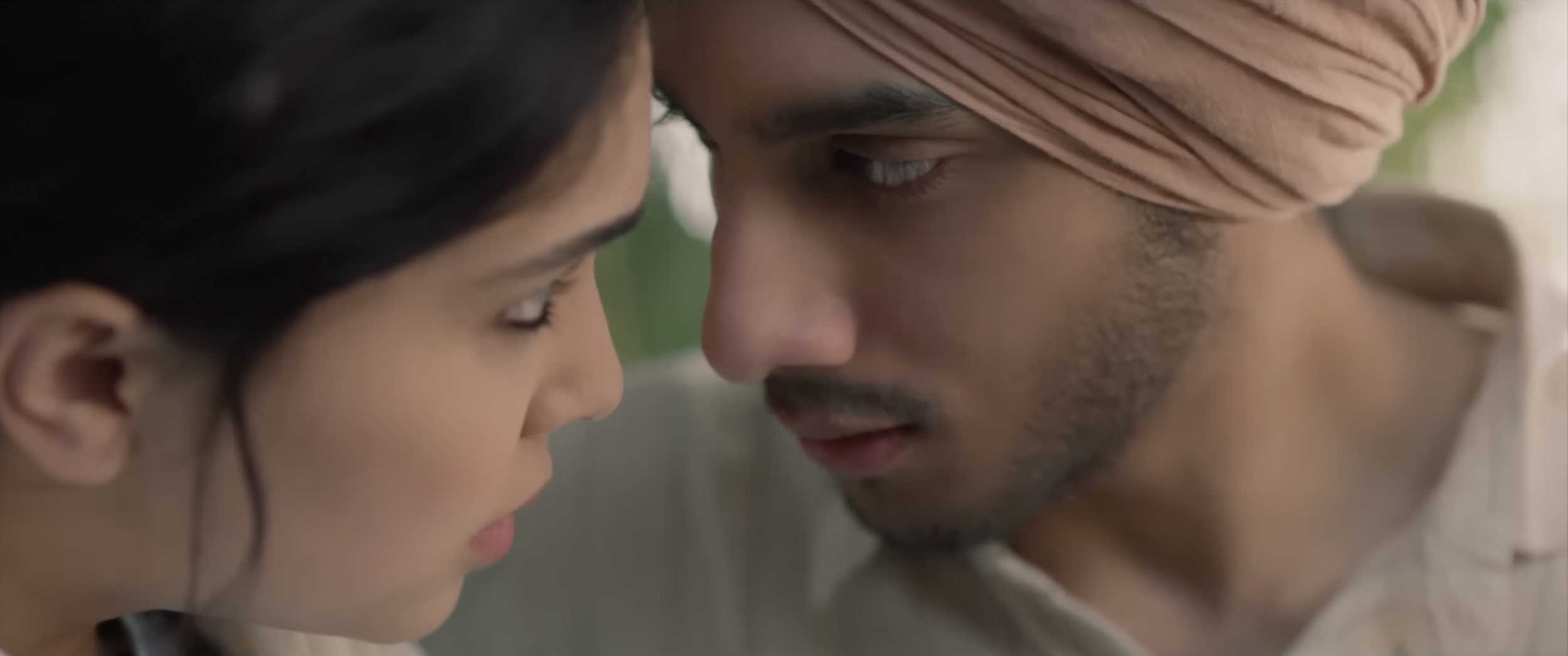
Image Source: YouTube
Grief that is not ours is also ours.
Regardless of the fictional elements of the film, the generic link between a love story set in 1947 and an audience in 2026 remains the facts of Partition. How we all (not just Punjabis) have a story of forced migration and the collective horror and displacement it caused in our family histories. We hold stories of friends, family, neighbours, parents and grandparents, of what it was like to be stripped away from everything you know and love. Through oration and dialogue, with parallels drawn through Nirvair's (played by Diljit Dosanjh) stand-up comedy, these stories continue to find new, innovative ways of being told. The times change. Oration styles change. The stories? They remain the same.
What begins as a surface-level comedic rant about diasporic identity to a handful of uninterested audience members gradually becomes something much larger: a comprehensive story with depth, irony and heart. It becomes a reclamation of mother tongue. Of identity. Of the absurdity of being robbed of your home and the relics that belonged to it, from the Kohinoor to the stories we continue to carry. And of the defiant spirit that remained after those who stole from us left by reclaiming their language and making it our own.
For Nirvair, doing stand-up comedy in a sparsely occupied bar in London, calling Bradford the capital of Punjab, confusing London with Lahore on stage, eventually transforms into a packed room in Chandigarh where his voice and words are no longer fragmented. There is now a coherent story to his comedy, one that moves from stereotype to social commentary, from surface-level observations to deeply personal and collective history.
He doesn't just reclaim his voice. He understands himself through it. By returning to his grandfather's story as he approaches death, Nirvair slowly returns to himself. It is a journey many diasporic and third-culture children come to recognize: growing up with a fragmented identity and the pressure to assimilate and integrate before ever having the opportunity to understand, appreciate or even grieve the culture, heritage and history they were born into.
Nirvair’s relationship with his grandfather is one I recognize. Being attached to the elders in your life and building a deep relationship with them is a feeling I know greatly: to sit and listen to their stories, to decode their past, to excavate their lives and understand them through different eras, different versions of themselves, their growth, their hurt, their history. Probably just like you.
They sit there with fragile skin and shaking legs while you listen to details about the mountains they had to become to support their families and keep them alive through monstrosities you could never fathom while sitting safely in your own home. You begin to realize that your experience of the same building might not be the same as theirs. To you, it might be your kitchen. To them, it may remind them of where their mother's tavaa ਤਵਾ (griddle, flat skillet) used to sit over the fire.
Nivi is the light that does not let us forget, as is every grandchild who sits with their grandparent to understand their story. It's an immersive process, but one that transforms your understanding of life, relationship and memory in ways you don't quite expect.
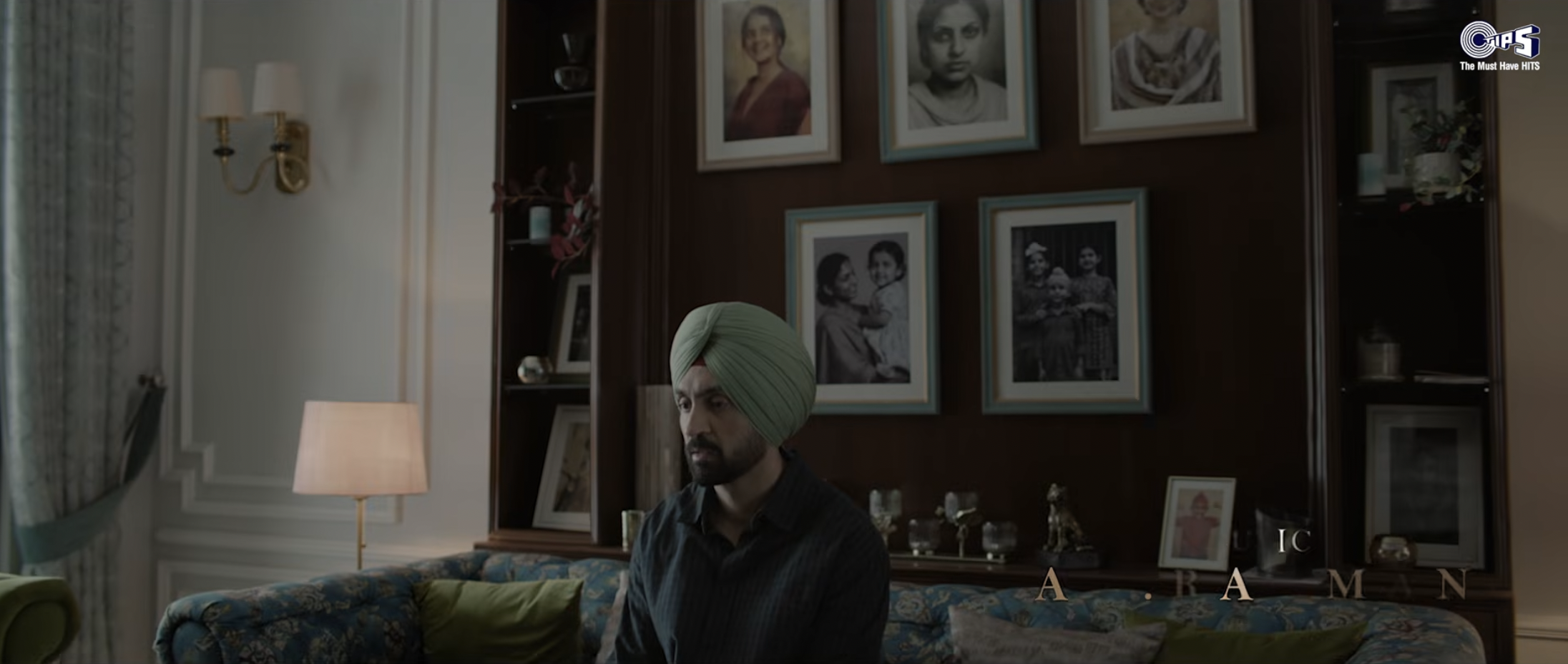
Image Source: YouTube
Diljit Dosanjh as Nirvair Grewal in Main Vaapas Aaunga
Who are you trying to come back to?
At its core, this film does not resolve intergenerational trauma. The task is too big for a single film to reconcile four or five generations of enduring trauma and silence in our DNA. But it does something bigger. It asks us to confront what we are running away from. To sincerely look at ourselves and honestly gather the trauma, sacrifice, and the hidden, untold stories of horror and love that we come from.
It asks us not to be displaced within ourselves, but to find wholeness. To choose love and joy and community; the nostalgia that lives in our bones is fully available to be tapped into and recreated by us, just as the horrors of Partition, current mass migration and genocide continue to be.
Yet that longing lives in our bloodlines through identity confusion, hybrid identity and expressive, immersive cultural fusion. We reclaim the ways we know how to. We preserve.
But somewhere underneath all the projects, the festivals, the websites, the movements, the new-era hybrid identity, cultural revolution and reclamation, we forget to preserve our collective identity, longing and history through relationships over material objects. Through presence over sensory experience.
We inherit the loop of Separation → Memory → Reconstruction
Migration has always been about more than crossing a geographical border. It is also about crossing memory. About learning to belong in places that will never quite resemble the ones your family once called home. There is a peculiar grief in longing for somewhere you have never lived, a grief of not being one with roots you’ve never known. It is a feeling many children of migration, third-culture kids and diasporic communities quietly carry throughout their lives. Not because we remember these places ourselves, but because we inherited fragments of them through stories, language, food, laughter, silence and relationship; we accept a scattered understanding of home. After all, who are we if we do not belong?
Perhaps that is why remembering is an act of reclamation. We do not remember simply because we are nostalgic. We remember because forgetting has consequences. We remember so that histories are not repeated, so that sacrifices are not erased, so that the people who came before us remain active participants in who we continue becoming. We listen to understand. We speak so we know. This is how we do not forget.
Geographical borders are manmade. They cannot be seen from space. Yet the consequences of drawing them are profoundly identical – they uproot, they silence, stifle and erase memory. Communities fragment. Shared language becomes politicized. Shared food becomes claimed, nationalized, politicized. Neighbours become strangers. We become "us" so we can separate the mirrors of our souls into "them."
Fragmentation creates a new memory and a new identity but it’s not one that is fulfilled or satisfied. At our core, there becomes this deep longing that we fail to understand, not because of personal memory loss, but because of the unspoken, unmetabolizable collective memory of stories too painful to tell. We all know a sense of a lack of protection, violation, exposure, not feeling safe in your body or community. Even if we “belong.”
Perhaps that is why a clay lantern, a brass vase or an old steel tiffin can stop us in our tracks. Even if we cannot explain why they stir a deep longing within us, they awaken a belonging that feels so true, it holds a weight that nothing else really does.
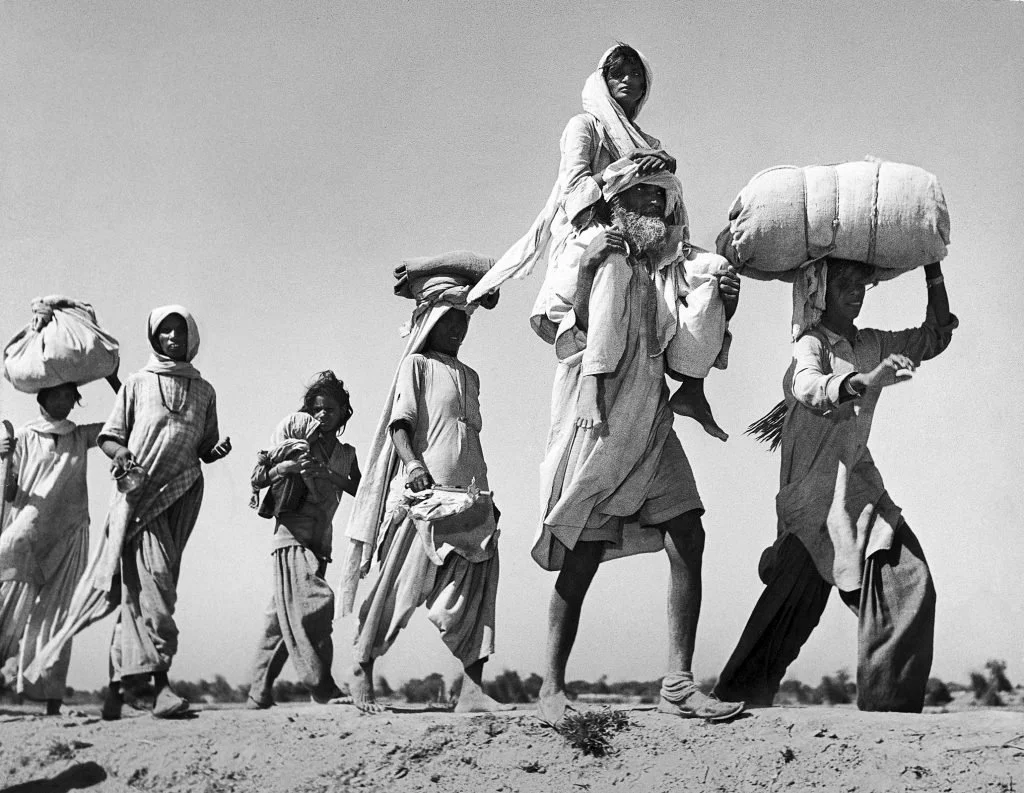
Image of mass migration during India-Pakistan’s Partition in 1947.
Image Source: Life.com
Who will remember after I am gone?
Transmission is a form of archiving we don’t truly think about. A way of remembering that preserves for only a finite amount of time through another person. A dialect survives through me because it was first passed through somebody else. How long did it survive before it reached me? How many voices carried it until it quietly became a part of my own? I can still hear the voice of my great-grandmother saying sweet words to me. Who knows how much that same voice screamed during the horrors of forced migration during Partition. Regardless, she was the apple of my eye when I was a child, and when I crossed the threshold into adulthood, I made sure to etch her name, ਗੁਰਨਾਮ, permanently beneath my heart. Like Malika Dilfareb (ملیکہ دلفریب). I carry her through more than her name. I carry her through accent and dialect – her gift to keep herself close to me for the rest of my life. When I am in conversation and my yesteryear accent is brought up, I smile and reminisce in response: "Bibi spoke to me this way." And then I wonder… Who else will speak this dialect when I'm gone?
Tradition carrying on is more than a symbolic gesture. It is a keepsake of birthright. Mother tongue. Dialect. Script. Recipe. Ritual. Holiday. Sometimes, they become the only tangible things we have left to hold onto.
What does it mean to love and grieve? For me, both sit on opposite ends of a spectrum. They come together more often than not. Perhaps preservation has always happened through relationship – not just through material objects and exhibits, but active remembrance through transmission. I pick up things about you and things you do because I love you. I catch myself saying something exactly the way you do.
We create kin in new lands. We build families. But how do we build communities? How do we remain in relationship with one another when belonging itself becomes interrupted and home grows increasingly ambiguous?
Even if we don’t understand it, we carry a collective memory of those who come before us in our bones – inheriting whole nervous systems and ways of being without knowing because it is passed down to us. The stories that come before us live within us, that’s why they resonate with us so deeply when we discover them. Imtiaz Ali did a brilliant job conveying that. You just have to pay closer attention to yourself to discover it.
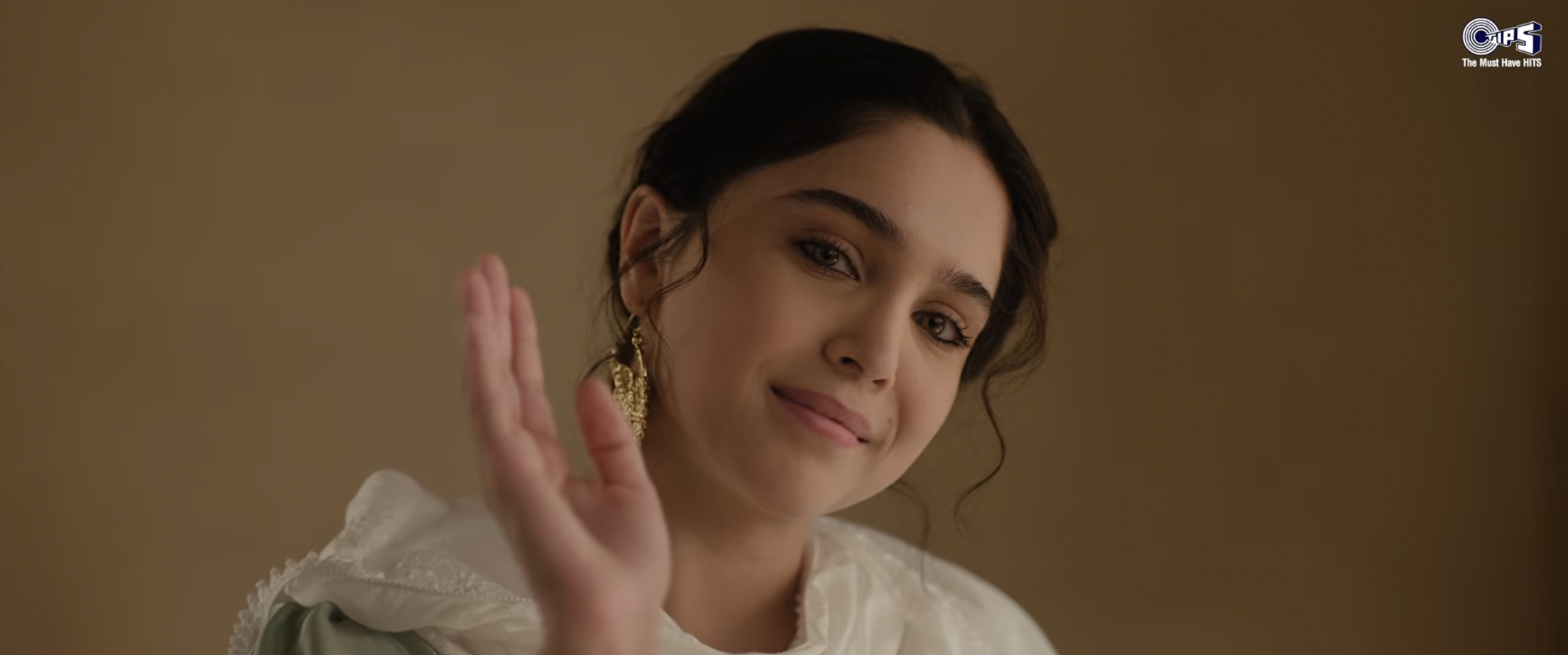
Image Source: YouTube
So,
What survives when there are no photographs or voice recordings?
What survives border crossings?
People become the archive, and what they don’t express, they pass down in dream, in memory, in remembrance. Not through visuals but through our very DNAs, our very emotional bodies we inherit from them. And when safety disappears, people adapt. Through hyperindependence, achievement, community building, advocacy, art. Through silence. Through laughter. Millennials know exactly how this feels. It is our crutch just as much as it is our limited strength. Just as two generations ago, personal memory included personal stories and moments with no faces and no photos, passed down through the collective memory of home, family, love, work, belonging and trauma. There’s a lot to learn and a lot at stake here, then, preservation is not an institution – the only way it is actively and truly carried through is through relationships.
What are the lessons that repeat about the poison that is within us, where we separate ourselves from others. Whether it’s through religion, or physical characteristics, or personality traits – not good enough, too loud, too quiet? Fundamentally, how do we understand each other? What do we neglect and let fester? What do we invite to heal?
Preservation is not an institution. It’s a relationship.
If people become the archive, then perhaps the question is no longer how we preserve history. Perhaps the question is how we preserve one another.
Do we cherish each other now just as much as we cherish archives and documentation? Do we treat one another as sacred? What are we trying to return to? Who are we trying to understand? What bridge are we trying to cross?
We may have the same name and same body – but who are we as we evolve and get traumatized by the happenings of our own lives?
Who are you to me if you don’t look like me, don’t sound like me, don’t speak the same language as me? Who am I in relation to you? If people are the archive, why are we too busy to care for and protect them while they’re still here?
What happens to the elder whose stories we keep meaning to record? The language we were too embarrassed to speak, or perhaps too proud to learn. The relative we haven't called. The neighbour whose name we still don't know. The community we keep saying we'll build when life becomes less busy.
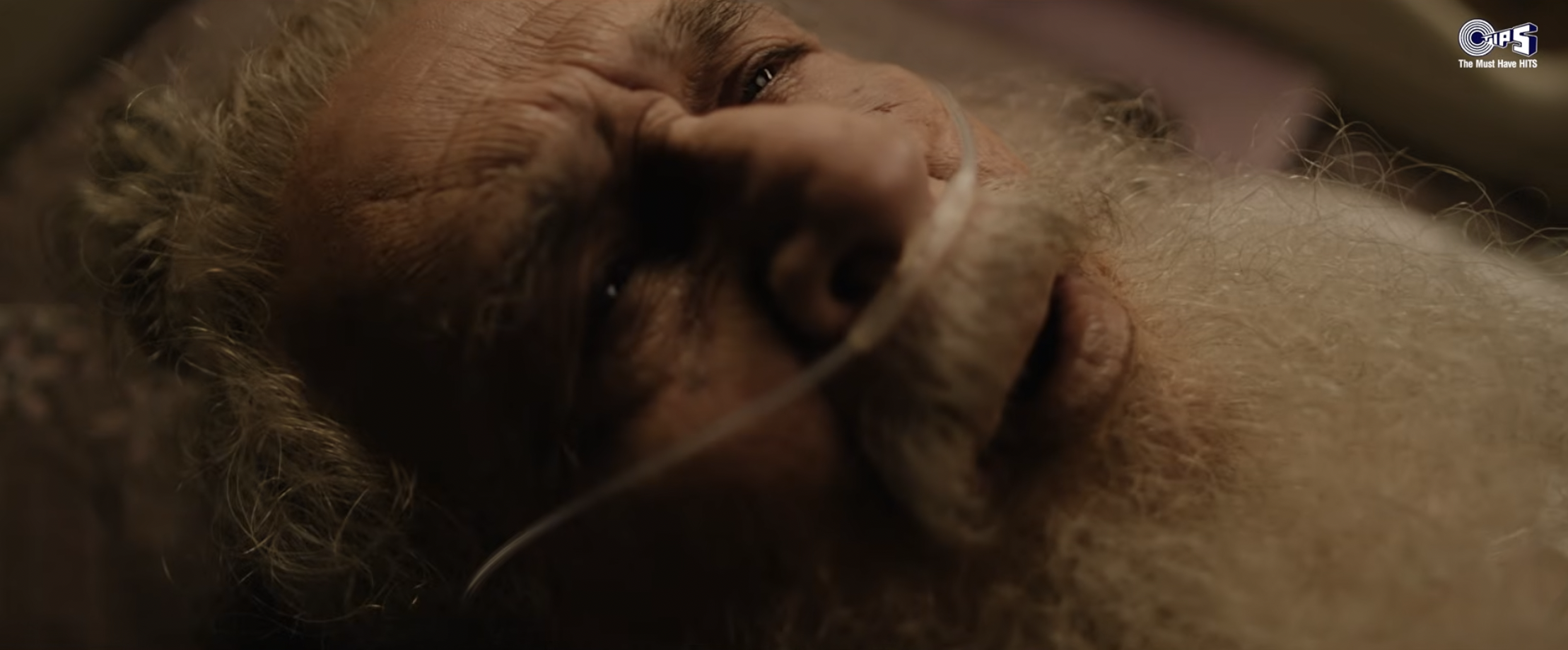
Image Source: YouTube
I can't guarantee that you'll find the answers to these questions in one go. I certainly didn't. Probably never will.
What I can promise, however, is that experiencing Main Vaapas Aaunga will bring you closer to the centre of your own heart and soul. To your story. Your emotional body. The blood and flesh you come from that survived atrocities, at one point lost everything and still carried on, imperfectly, to build families and legacies.
For two hours and forty-seven minutes, you may find yourself returning somewhere unexpected. Not necessarily to Punjab. Not necessarily to 1947. But to yourself. To the people who made you possible. To the grandmother whose roti filled your stomach long before you understood the weight of her story. To the sound of her laugh. To the twinkle in her eyes. To moments when you felt lighter, when you loved and laughed with kin, before you understood how fragile those moments really were.
Regardless of where you are, between innocence and joy, heartbreak and loss, you will feel whole.
And maybe, just maybe, when the credits begin to roll, like me, you'll hear your grandmother's laugh with a little more clarity than you did before.
Main Vaapas Aaunga is written by Imtiaz Ali and Nayanika Mahtani. The film is also directed by Imtiaz Ali and stars Naseerudhin Shah, Diljit Dosanjh Vedang Raina, Sharvari Wagh, Rajat Kapoor, Sanjay Suri, Manish Chaudhari, Nikhat Khan and Banita Sandhu. The music of the film is composed by A.R. Rahman.
(This is not a film review, but it will be categorized in our Archive as one)